I Forgot the Mother’s Day Cards

It hit me last night that I had forgotten to send Mother’s Day cards to the very special women in my life that I would normally remember this weekend. I haven’t been into a store in the last six weeks because of my second foot surgery, but that doesn’t explain away the fact that I didn’t get cards. I honestly just didn’t think about it. That makes me sad. Now, I have obsessed over it all night. With little sleep and tears flowing, I’m watching the dawn break.

Tomorrow will be the second Mother’s Day without my Mom physically here. Last year, my professional counselor asked me often leading up to Mother’s Day how I was going to honor my mother since it had only been seven months since her death. She asked me about my process of mourning and how I was handling my grief. She was trying to help me prepare for the challenge of the weekend. I appreciate how she guided me to think well in advance of how to recognize the day. As the COVID pandemic raged and stay-at-home orders were in place, Steve and I planted roses, azaleas, and butterfly bushes. Each plant brought memories of how my mother loved flowers. She always said she wanted them while she was living, not at her funeral. The blooming of each one this spring has brought back precious memories.

This year, the counseling questions have been focused on how I’m dealing with this ongoing foot surgery and recovery. In advance of the second surgery, I bought Easter cards and prepared them on the weekend following my surgery. But I forgot the Mother’s Day cards.

A dear friend is preparing for her mother’s celebration of life service this afternoon. Other friends are walking the journey of being with their mothers as they transition from this life. Still others are facing this first Mother’s Day following the deaths of their mothers. I know I’m not alone in dealing with a challenging weekend.

Yet, there are those mother figures in my life that I needed, that I wanted to honor. Yes, I can pick up the phone and call, but I’ve missed the one tangible act this year that I could easily accomplish. I forgot the Mother’s Day cards.

While I am filled with joyful anticipation about the return to in-person worship tomorrow at our church, I acknowledge that there will be many of us entering worship expecting the hurt and tears that come with traditional acknowledgements of this weekend. I’ve had 46 years of Father’s Days without my Dad, but churches have never placed the same emphasis on recognizing fathers as they do mothers. Mother’s Day has been hard enough for decades now, even when my Mom was seated by my side. When you do not have children of your own – whether by choice, health or life decisions, Mother’s Day is hard. There are so many others who bring the memories and emotions of their own life contexts into this weekend. The same professional counselor who helped me face the first Mother’s Day without the presence of my mother, has also guided me through all the emotions of making a decision to not have children that flooded back with the birth of a step-grandchild.

Some of my tears this weekend come from actions of well-meaning church people who do not recognize the harm they cause. Especially since 2016 as the United Methodist debate over ordination of persons who are LGBTQ+ and same-gender weddings has intensified, more and more people have shared with me their argument that same-gender marriage cannot naturally fulfill God’s command that we multiply in order to glorify God’s kingdom. From their understanding has come the words that say one is not worthy of God’s love if you cannot or do not produce children without the help of medical science or choose not to do so at all. To members of my own church family who have made that argument while sitting directly across the table from me, I’ve wanted so many times to say, “Do you realize who you are talking to? – a woman without children of her own to whom I hear you saying that I don’t glorify God.” As the arguments are growing stronger again, as conversation gets louder about the future of The UMC, I forgot the Mother’s Day cards.

Daylight breaks, and I am grateful that May is Mental Health Awareness Month. We all face difficulties. We are all struggling with the effects of the COVID pandemic. We all need the counselors and friends in our lives who ask the good and appropriate questions that help us deal with the challenges of life. So, I forgot the Mother’s Day cards; it’s just another step in the journey of walking Martha home.

Renewed, Restored and Rekindled Hope

Posted over on the VAUMC.org website today under “The Ministry of the Laity” pages (https://vaumc.org/cll/) and sharing it here.

As we anticipate longer days and the coming of spring, I encourage you to spend time in reflection of all that has happened in what seems to have been two very short months at the start of 2021.

  • The COVID-19 pandemic continues, but there is renewed hope for a different future as the most vulnerable in our communities and the essential workers who have kept our society going over the last year have received vaccinations.  What wonderful news that the majority of adults in our country may be vaccinated by early summer.
  • The pandemic of institutional and systemic racism continues, but there is restored hope for a different future as we focus on intentional work in the Virginia Conference to address our history and strive for greater understanding and advocacy.
  • The political division that grips our country continues, but there is rekindled hope as our first ever National Youth Poet Laureate, Amanda Gorman, challenged us as she delivered her inauguration poem:

“We close the divide because we know, to put our future first,
we must first put our differences aside.
We lay down our arms
so we can reach out our arms
to one another.”

Renewed hope emerges when together we stand with those who struggle, whether that struggle is with health, employment or injustice of any type.  Listening to one another, understanding one another’s needs and dreams, and working side-by-side to address concerns are required of all of us.  Creativity, innovation, and nimbleness are needed more than ever from the laity and clergy in our congregations.  Our lives are filled with constant change. All of this requires that we live into our call to be lifelong learners, disciples who continue to study and question as we grow in our relationship with God through Jesus Christ.

Restored hope intensifies when we realize that before we can transform the world, we must first do the hard work of recognizing where transformation needs to happen in our own lives.  Are we really listening to one another and doing all that we can to understand one another’s personal stories? Are we willing to talk about our past and learn from it to create a different future? Relationships built with understanding and mutual respect come from shared stories and experiences.  Serving together creates the space and connection for trust to be formed, for reconciliation to occur, for lives to be changed, for communities to be transformed.

Rekindled hope ignites when we use our shared influence as partners in ministry, laity and clergy together, to take the gospel message into the world through our words and actions.  To become what we need to be in this time, we must be willing to take risks, to ask hard questions, to offer steadfast leadership when there are many more questions than answers.  We must remember that as the people of God called United Methodists, our call is to “convince the world of the reality of the gospel or leave it unconvinced.”(Section 2: The Ministry of All Christians130. Faithful Ministry, The Book of Discipline of The United Methodist Church– 2016)

The challenges of our time call us to a revitalized commitment to partnership in ministry.  Differences in how we understand our faith and how we experience events of the world will always be part of our life together in the church.  However, our united mission as disciples of Jesus Christ should always be the central focus. 

20 “I ask not only on behalf of these, but also on behalf of those who will believe in me through their word, 21 that they may all be one. As you, Father, are in me and I am in you, may they also be in us, so that the world may believe that you have sent me. 22 The glory that you have given me I have given them, so that they may be one, as we are one, 23 I in them and you in me, that they may become completely one, so that the world may know that you have sent me and have loved them even as you have loved me.

John 17:20-23 (NRSV)

I ask you again to enter into a time of reflection as winter closes and the signs of new life that come with spring begin to emerge.  Join me in prayer that, united as one, the United Methodists of the Virginia Conference will demonstrate the kind of holy living that our founder, John Wesley, understood as our primary task: loving God and caring for one another with Christ-like love.

Peace and Blessings,

Martha

Reset, Emerge, Embrace

I’ve had a hard time discerning a focus word or phrase for 2021. After my choice last year, I’ve almost been afraid to commit to anything. Gilda Radner’s quote that moved me to settle upon “Delicious Ambiguity” as my focus phrase for 2020 couldn’t have been just a random statement that appeared from a simple search. How much more ambiguous could a year have been? Doubtful, of uncertain nature, obsure, problematic, puzzling, difficult to comprehend….all of those definitions of “ambiguity” perfectly describe 2020. I had almost reached a point of keeping the ambiguity going into 2021.

But three words have continued to call to me this week: reset, emerge, embrace.

  • Time Magazine had a cover and article in early November which described “The Great Reset,” how the COVID-19 pandemic has presented all of us with the opportunity to think about the kind of future we want, to transform how we live and work. Entering 2021 demands a resetting of priorities, intentions and outlook. Turning 60 soon demands a RESET.
  • The Oxford Languages dictionary defines EMERGE as to “move out of or away from something and come into view,” to “become known.” With a reset, new visions and demands come into view. Marianne Williamson, author and political activist, is quoted as saying: “Every problem emerges from the false belief we are separate from one another, and every answer emerges from the realization we are not.” That is a vision that cannot just emerge in 2021 but must take hold in our communities, in our church and in our world.
  • Did I mention that I’m turning 60 soon? If you teach and preach that getting older can mean accepting who you have become over time and are continuing to become…that purpose and meaning can become more clear…that priorities come into focus…you better live that way. In her book, The Black Hawk, one of the characters created by Joanna Bourne remarks: “I like the woman you became better than the girl you were. I like the story you’ve written on your face.” This year ahead is the time to EMBRACE the story that has been written thus far on my face and anticipate the story that will continue to unfold. Oh, how deliciously ambiguous the story unfolded in 2020! Embracing a COVID vaccine, family members and friends we haven’t been able to hug in so long, uncomfortable conversations with the power to transform, challenging decisions that may change the church…are all anticipated to be part of the unfolding story of 2021.

Three focus words for 2021: reset, emerge, embrace.

As I begin to reset on this first day of Janaury, it’s good to remember how the name and focus for this blog were chosen. The first post to what was then “Walking Martha Home” was at the end of May in 2013. My early morning walk that day was filled with reflections on events of the last week.  In the midst of all the thoughts swirling in my head, there was a constant call to write about my experiences.  There was a persistent question of whether my life lessons could impact the direction of lay leadership in the Virginia Conference of The United Methodist Church. There was also a flashback to a quote I had tweeted a few weeks prior from Todd Adkins (@Todd Adkins):  “Sometimes God puts young leaders around you who need to hear your past so it doesn’t become their future.” 

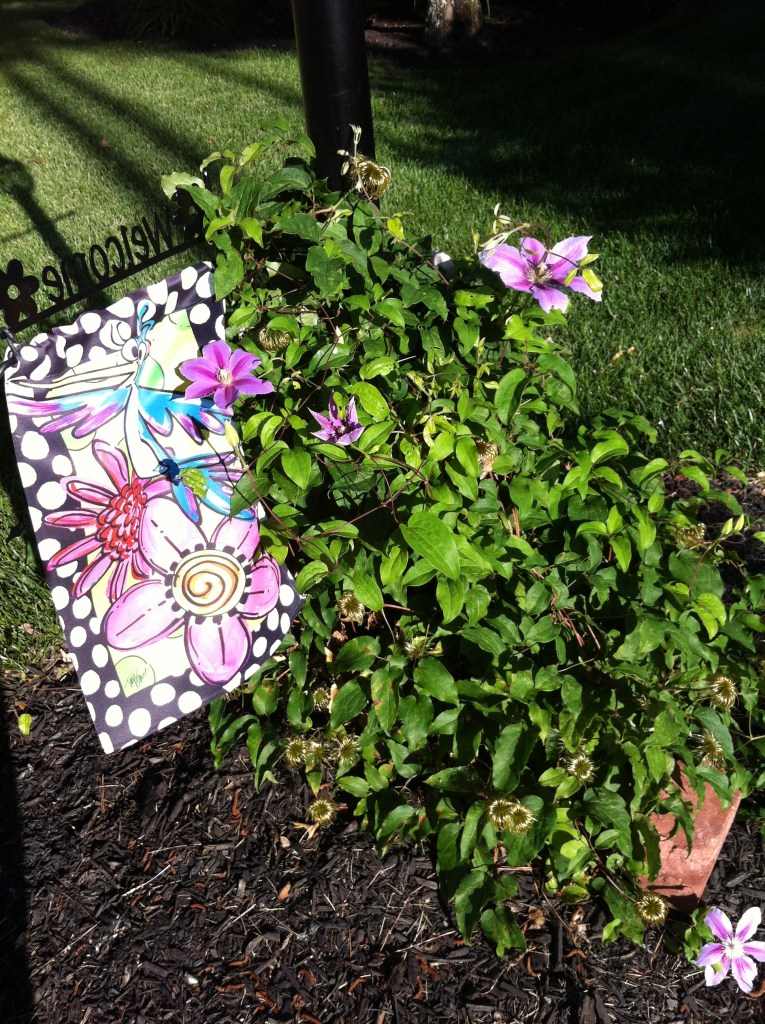
As my walk ended and I came to the lamp post at my sidewalk, I snapped a picture which is still attached to my profile: a blooming clematis vine wrapped around a garden flag and an old brick. That day in May, the climbing vine was breaking forth with purple blossoms and stretching in every direction possible, unconcerned about how I tried to tie it off and make it conform to my expectations.  The garden flag had grabbed my heart when I saw it at a local produce stand because of the goofy blue bird in its center: a bird so wacky looking that I just had to have it in my yard to prompt me daily to enjoy life.  The brick was set in place to remind me of my life story, taken from the pile of rubble after the demolition of a 90 year old building in my hometown which was destroyed by fire that same year.

Joyce’s Drug Store filled part of that building for many, many years.  It was across the street from the primary school I attended.  When I was young, that store is where I would meet my mother after school, have a drink or ice cream and possibly buy a comic book, before we walked home.  Sometimes I’d have to wait a little while in the safety of the drug store before she arrived.  In 1968, the school system was finally integrated, and one day that year when my mom was very late coming to the drug store, a new male friend who was in my second grade class decided to walk me home.  The house I grew up in was on the edge of the road that divided the black and white sides of our little village.  Ronnie lived on one side; I lived on the other. At age 7, we were too young to know the turmoil we might be creating.  As we rounded the curve toward my house, I remember seeing my mother on the front porch. I can’t recall the look on her face.  I do remember Ronnie’s words:  “I’m walking Martha home, Mrs. Ensley.”  I realize now that my journey of authentic leadership began that day. 

In “Discovering Your Authentic Leadership,” an old article from February 2007 in the Harvard Business Review, authors Bill George, Peter Sims, Andrew McLean and Diana Mayer described a process of research interviews conducted with 125 leaders identified for their success.   The interviews were based upon one question:  “How can people become and remain authentic leaders?”  In analyzing the results, the research team found that the leaders did not identify specific essential leadership characteristics or traits.  It was their life stories that formed the foundation of their success.

So, my journey of authentic Christian leadership which began the day Ronnie walked me home continues with this blog.  By the way, we all knew by the time we became teenagers that Ronnie was gay.  By the early 1980s, he had died from complications of AIDS.  His life continues to impact my life story.

My prayer on May 31, 2013, was that this blog would impact the lives of those who are on this journey with me to be the best United Methodist lay leaders we can be. Little did I know then that today I’d be the Virginia Conference Lay Leader…and “Still Walking Martha Home.”

A different clematis vine grows on the lamp post of our house now. The holder for the garden flag has been RESET in a new community. Since foot surgery has kept me from cutting it down, the vine is frostbiten but new white blossoms will EMERGE soon enough. The brick from Joyce’s Drug Store greets me everytime I walk to and from the house. And what better time than now for all of us to EMBRACE the story of incarnation in the words on the flag: “Love is born.”

May just the right focus words or phrases find you this year.

Frostbitten vine, brick and Christmas flag – 2020
Wild bird, brick and vine – 2013

On the Eve of October 15th

I can remember my mother telling people that I only said what I really wanted people to know.  That was her way of saying that despite being a true extrovert who could strike up a conversation with anyone she met, she had raised a very quiet, private daughter. 

One thing Mom never knew was that at various times in my adult years I’ve sought the guidance of professional counselors to help make sense of life.  She would have been the first to tell me to seek help if needed, but I never wanted her to see me as needing it.  With World Mental Health Day having just passed on October 10th and today being the eve of the day Mom took her final breath last year, I’m acting upon the suggestion of my counselor to write a letter to my mother.  

Grief has emerged in various forms over the last couple of weeks leading up to this first anniversary of Mom’s death.  I’m not at a place of writing a new letter today, but there are two that I pulled out of scrapbooks last night.  Both were written as nomination letters for recognitions I learned about for parents who had been role models for their children.  I don’t recall if I ever told Mom that I had submitted either of them, one in early 1990 and other in November, 1998.

Since I can’t write a new letter tonight, I’m sharing the letter from 1998. Much could be added to highlight the additional 21 years of Mom’s life especially as I think about the example she set for me and my brother – no, more like the amazing gifts she gave us – as she cared for all of her end-of-life plans, made her own decisions to move from her home of 60+ years to a senior apartment and later called us to say she was going to stop driving and give the car away. So back in 1998, I wrote….

In 1925, Elijah and Mattie Helton were supporting their family by working as tenant farmers on a piece of land in Russell County, Virginia.  My mother, Trula Annette, was born that December 1st, the youngest of the nine Helton children.  Like her brothers and sisters, she grew up helping tend the tobacco and other crops on the land.  Mom, from what I’ve heard, was also a pretty good athlete while in school, possibly the result of developing her strength and endurance from working the crops. Basketball was her sport of choice.

Most of my uncles and aunts left Russell County to seek their fortunes in other localities.  My mother watched as they moved away from rural southwest Virginia.  The oldest child settled in Ohio, the second remained in Russell County, and the third moved to Kentucky.  The youngest brother (and the child next to my mother in age) was killed in action in World War II.  The other brothers and sisters settled in a small Virginia village called Fieldale. Jobs were plentiful in the new towel mill built by Marshall Field so many people, including my relatives, moved into the town to manufacture soon to be famous Fieldcrest linens.  As my uncles and aunts began work in the mill, they also began their families. Even then, in the early 1940s, good child care was hard to find, so they called upon my mother. She came to Fieldale to care for her nieces and nephews, and it was there that she met and married my father, Eugene (Gene) Ensley.

If there is a woman that exemplifies the qualities not only of a great mother but a true role model, it has to be my mom.  My mother has accepted numerous challenges, exhibiting a very strong character, loving personality, and courage along each step of her journey.   She has raised two children during two very different eras.  My brother was born in 1946, a part of the baby boom when soldiers returned home from World War II.  He attended the segregated schools of Henry County and graduated only to enter the Marines and the Vietnam War.  It was fifteen years later, in 1961, when I entered the family.  My mother jokingly compares herself to Elizabeth in the Bible, for her first reaction after finding out she was pregnant with me had to be, “God, what am I going to do with this child at this point in my life?” Thirty-five seems fairly young by standards these days for having a baby but in 1961, it was not the norm!  As I grew, the world was changing drastically.  Schools in Henry County were integrated when I entered the second grade. It was the Iran Hostage Crisis that was changing the international landscape when I entered college. My mother made sure that both her children, despite the difficulties of the times in which we were growing up, maintained a sense of pride in ourselves, our spiritual foundations, and a love for all our neighbors.  In reality, she raised two children in two very different times.

As long as I can remember, my mother talked about wanting to be a nurse.  Because she chose to come to Fieldale to help her sisters with their newborns then married my father, she did not have the opportunity to follow her dream.  Instead, she went to work to help support our family. She spent several years working in a hosiery factory and then worked for 25 years at E.I. DuPont in Martinsville, Virginia.  She truly was one of the first working mothers to skillfully handle all of her responsibilities.   My mother and father both worked in order to provide for our family.  The longest lasting possessions they provided, however, were not bought with the money they earned, for what they provided the most of was love, courage against all obstacles, and compassion for all humanity.

I was 14 when my father died in 1975.  My mother was 49 years old but was still acting 30 in order to keep up with her teenage daughter.  In order to spend more time with me following my father’s death, my mom retired from her textile job.   Mom had never learned to drive, but soon she climbed behind the wheel of a driver’s education car.  She used her “expertise” to teach me to drive a few years later.  Once she could drive, she became active in all of my high school’s parent groups and was almost more well known among my peers in my small school than I was. She also volunteered in the local hospital’s emergency room where she consoled family members waiting on word of their loved ones’ conditions.  She was finally getting to work in a medical setting.

It didn’t take long for her to accept the challenge of returning to school to fulfil her dream.  She enrolled in a nursing assistance program at the local community college.  The emergency room volunteer job gave way to a full time, paid position in the physical rehabilitation department of the hospital.  Talking to and helping others has always been easy for my mother.  This job was perfect for her.  My mother was a respected member of the hospital staff, recognized for her work and love for people by being chosen by her fellow workers as the hospital’s employee of the year in 1988.  Not only did she achieve her life-long goal of caring for people during times of illness, but she received the highest honor given by the hospital employees to a colleague.  Following her retirement, she continued to serve as a goodwill ambassador for the hospital by “modeling” in their advertising campaigns and volunteering with the hospital auxiliary.

My mom has taught me by example how to be a true woman of substance.   In the past few months more than ever before, she has exemplified the height of grace and true compassion. Her male friend and companion of about 15 years was diagnosed with heart problems and cancer in May.  Jim was like a second father to me as well as grandfather to my niece.  Mom cared for him daily at his home, then later at a skilled health care center until his death in October.  During the same period of time, she lost her oldest and last surviving brother, the husband of her last surviving sister, and her best girlfriend.  Just a few weeks ago, she was the first to arrive on the scene when a neighbor was inside his burning house.  Mom was there to comfort everyone else as his body was pulled from the flames.  Through all of this loss, mom has been a rock — showing the rest of us how to give with all our hearts and souls for no earthly reward but out of the kindness of our deepest selves.  Would you believe that as all this was happening, mom decided to — of all the difficult jobs to take on — enter a hospice volunteer training program?  

Throughout her life, the rearing of her children, and her work in and for the community, Trula Helton Ensley — my mom — has shown us all that respect and genuine compassion for all individuals can lead to better lives for everyone.  People I don’t even know tell me all the time what a special mother I have and often call her “Momma Trula.”  She continues to be a role model for her children, other family members, the people with whom she works, and the community by always being willing to share her time, concern, and happiness.  She has led, I am sure, to changes in people’s lives whether outwardly by making their hurts and injuries feel better or more importantly, inwardly through a kind word or compassionate hug.  She has been there whenever a call for assistance has come and usually before the call was ever uttered.

I wanted you to know how much I value my mother and all the lessons of life and faith I have learned from her.  I only hope that I can exemplify in my life the qualities she has shown me.  My deepest regret at this point in my life is that I have no children of my own to pass on all of the lessons I’ve learned from my mom.  I told her recently that if I could only be half the woman she is, I’d feel I’d done well with my life!  

And if I can be half the woman she was for whatever remaining time I have on this earth, I will have done well with my life.

A Web of Discernment

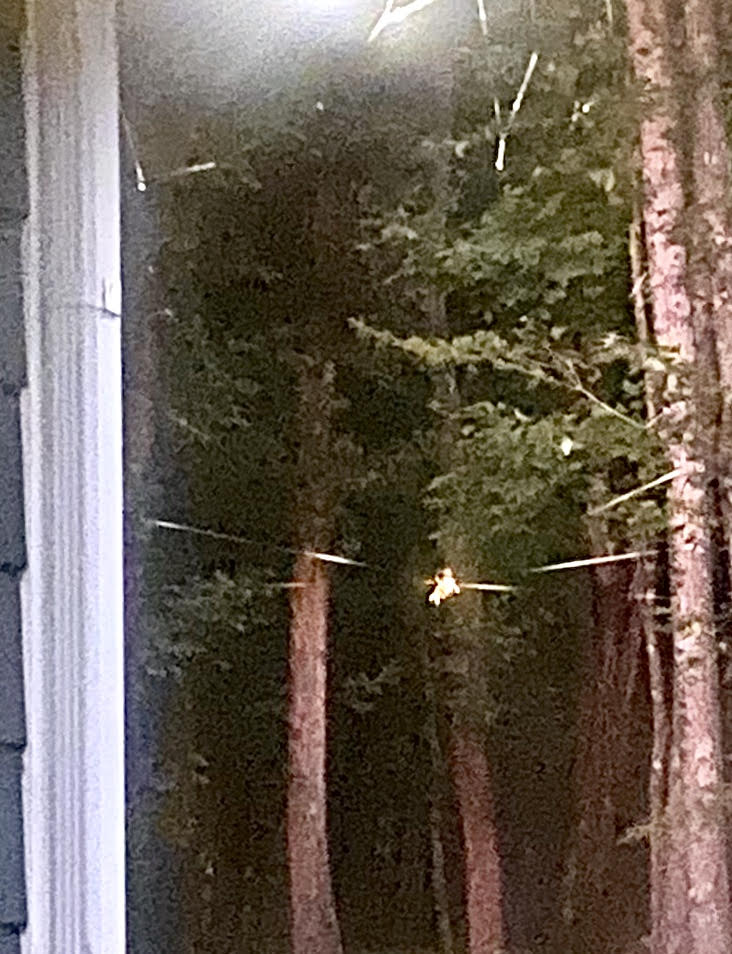
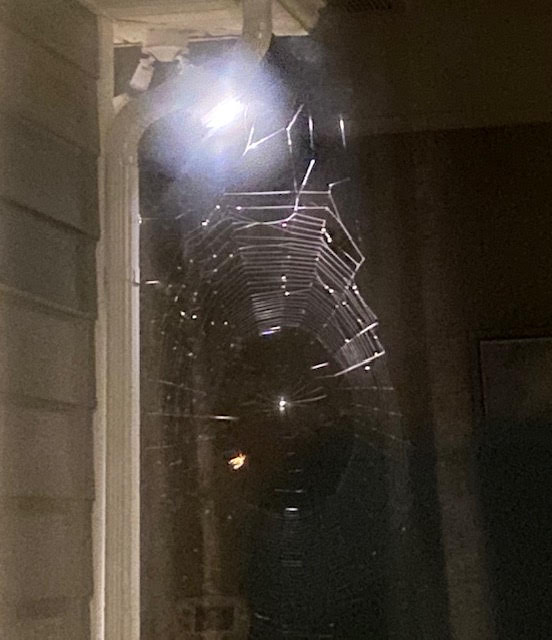
I’ve been listening to my Discernment Playlist tonight as I watch a spider build a web outside our dining room windows. I first noticed the spider at dusk. A huge, yellowish brown spider. It hadn’t been at work long; you could just begin to see the main threads of the web coming down from the gutter to the shrubs below. The floodlight at the corner of the garage made the silky threads glisten brightly as a misty rain fell.

The floodlight brought forth all the food the spider needs. Every flying creature in close proximity began to quickly get caught.

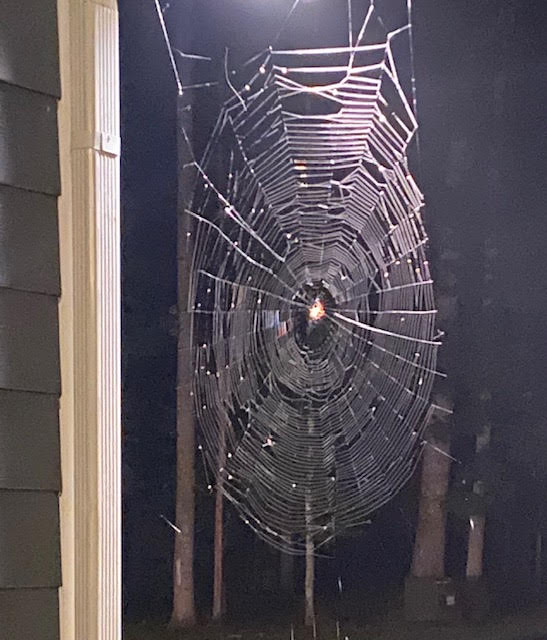
As darkness has fallen, the spider has worked harder and harder; it’s web serving it’s intended purpose. The web has now expanded to fill almost the entire corner. Looking from the safety of inside the house, the web is beautiful. What a work of art and mystery! The weaving of every small strand has become an amazing creation.

The song that’s now playing is Confidence by Sancus Real.

"I feel unqualified for what you're calling me to
But Lord with your strength
I've got no excuse
'Cause broken people are exactly who you use
So give me faith like Daniel in the lion's den
Give me hope like Moses in the wilderness
Give me a heart like David, Lord be my defense
So I can face my giants with confidence"

 - Copyright Universal Music Publishing Group, Warner Chappell Music, Inc. 
Songwriters: Matthew Ross Armstrong/Jordan Michael Bailey/Tony W. Wood

“I feel unqualified for what you’re calling me to…” resounds in my head tonight. And yet this spider…. There it is, constantly spinning, constantly creating, constantly moving – just as God has called it to do without fear or hesitation. And I stand amazed at what one small spider is doing, watching as if I’ve never seen anything like this before. (I’m saying it’s small, but from in here it actually looks pretty huge as spiders come.)

So what am I afraid of? What awe-inspiring work is God calling me to do – one thread at a time until the creation is finished? Faith, hope and heart: looks like the spider’s got it even if the “giant” may come crashing right through its work early in the morning light. So I’ve got no excuse, and neither do you. Just “Lord be my defense so I can face my giants with confidence.”

First notice of the spider…
As darkness began to fall…
It’s still not done…

Unfriending

Deep within the Doctrinal Standards and Theological Task section of our United Methodist Book of Discipline are the rules John Wesley offered to the small groups of Methodists meeting as classes.  It was toward the end of 1739 when one of the groups reportedly came to Mr. Wesley seeking advice about how they might “flee from the wrath to come.”  Thanks to the work of Bishop Rueben Job we know these as the Three Simple Rules: “Do no harm. Do good. Stay in love with God.” Yet, today just as in the time of Mr. Wesley, these are not simple rules to follow.  They require every bit of our energy and commitment to be authentic followers of Jesus.

These rules, the promises made on my behalf at my baptism, and the vows I spoke when I became a member of The United Methodist Church are ingrained in my heart and soul. They have become more and more important as I continue my spiritual walk home. Over the last few months, I’ve spent a good deal of time pondering how I am to live them out in this new reality in which we find ourselves.

Early this morning, that pondering led me to unfriend a childhood friend on Facebook.  Truthfully, that’s a first for me.  I’ve blocked people’s newsfeed temporarily. I often ignore people’s rants and overly political memes.  If I’m really honest, I have to admit that I just skip over some Facebook friends’ post because I assume I know where they are headed.  I do my very best not to join in politically-based discussions or respond to things I know or can research as being complete or partial truths.  I pray that you can never say you see much that is negative in anyway on my Facebook or Twitter feed because I try really hard to not use social media that way.

But this morning, first thing, there was a post that shared a description of a person that was not acceptable by any means.  It did harm just by being written and posted.  It was a post in the same vein as many this individual had put up, posts that I would usually just say something under my breath about and go on.  This one was different, though; one word stereotyping a person, causing hurt and fueling division that I couldn’t let go of as I started my day.  So before I left home, I made a decision to unfriend the person and committed to doing the same to others, no matter how long we have known one another. I just don’t need this in my life. The world doesn’t need it.

Instead of responding in any other way, I “unfriended” and posted the words St. Catherine of Siena, a fourteenth century nun, is famous for saying: “Be who God meant you to be and you will set the world on fire.”

I hopped in my car and headed to work. I knew better than to listen to the news which is my normal habit at 8:00 AM so I switched to “The Message.”  The first song I heard played in its entirety was new to me.  Now, it’s in my “Forward to 2021” playlist.  The words have echoed in my head and resonated in my heart all day. 

Before starting to write, I searched for the story behind this song that was released just a few months ago.  These words are from the American Songwriter website from July 9th.

I wrote ‘Revolutionary’ in October of last year, not knowing anything about what 2020 held. I never could have imagined that this year would bring both a worldwide pandemic and the racial tipping point we’ve experienced because of the murder of George Floyd and so many others….All that I knew is that in the USA, 2020 was already set to be a divisive and polarizing year due to the upcoming presidential election. When I sat down with my friends James Tealy and Steve Fee to write these lyrics, we wondered if we could pen something that would inject a little bit of hope into the political situation we’d all be facing in the coming months….I didn’t intentionally write ‘Revolutionary’ for the pandemic and for this specific moment of racial tension and reconciliation, but I’m so glad this is the song I get to sing during this time….”  

Josh Wilson: Striving To Be “Revolutionary” in Kindness
https://americansongwriter.com/revolutionary-by-josh-wilson-meaning-behind-the-song/

I take hearing this song as soon as I got in the car this morning as the Holy Spirit’s leading.  You can interpret that as you like.  If what you want to say in response is in anyway negative, don’t comment about it on my Facebook page. If you disagree with anything I’ve said, don’t note on my Twitter feed or in the comment section of WordPress that I’m damned to a life in the flames.  I’m going to hold on to St. Catherine’s message that if I live as I believe God is calling me, I’ll set the world on fire – and I might just be singing these words (since I can’t get them out of my head today).

Maybe you’re not like me
Maybe we don’t agree
Maybe that doesn’t mean
We gotta be enemies

Maybe we just get brave
Take a big leap of faith
Call a truce so me and you
Can find a better way…

Why does kindness seem revolutionary
When did we let hate get so ordinary
Let’s turn it around, flip the script
Judge slow, love quick
God help us get revolutionary…

“You Only Get One Go Around”

Discernment takes many paths. Many walk at times with you, maybe for a day or a season; some bless you with a lifetime. Travel partners come by your side as family by DNA. Some are invited intentionally; others are brought along by chance. Those who journey alongside stretch us, nurture us, support us, lead us to new growth. It can be years sometimes before we realize how those who walk with us transform us.

In less than three weeks, Steve and I have come to face the deaths of three people who journeyed with us during different points in our lives. The first was my second cousin who died much too young as a result of serious health conditions. Most of my memories are of a tiny little guy, 10 years younger than me, with a head of curly, white-blond hair. There was a framed piece of art in his grandparents’ house of a young Englishman. It was one of those paintings where it looked like the eyes of the person in the portrait followed you around the room. I have a picture of my cousin sitting on his grandparents’ couch with that painting over his shoulder. When my uncle died, of all the things in the house that had belonged to her sister, my mom wanted that picture. Those eyes continued to follow everyone who came into our house in Fieldale for many years.

This past Friday we learned that a friend with whom Steve played senior softball and basketball had taken his life the day before. The “Nothing Better than Age,” THE NBA, was the beginning of our path together. There were many stops for nourishment around our kitchen table. Nobody ever complemented my cooking the way he did. An accomplished athlete in his younger years, there was always a high level of energy when he was present. Yet, many also knew there was just as high a level of anxiety and stress.

Today we learned of the expected, but still difficult to comprehend death of “The Other One.” A few years after we met, the other Martha and I jokingly talked about what to call each other. The choice was “The Other One” and it stuck for 27 years. Our birthdays were just 8 days apart so the cards would always be from “The Other One.” Every email was signed, “The Other One.”

Often leadership development starts when one person sees gifts and graces in another and calls them to life. In our work of multiplying leaders for the church, the responsibility is to take the next step to encourage that person to find the place to use their talents to build the Kingdom of God. We must then continue to check in, to see if there is a match and to determine what we can do to support the new leader in their journey of discovery and service.

Not six months after I joined Shady Grove UMC, “The Other One” – with whom I had been singing in the choir – invited me to lunch. It was a fancy place, the original DeFazio’s at The Shoppes at Innsbrook. Well, for me it was fancy. We went after church one Sunday. After enjoying the meal and conversation, I was hit with the ask. Speaking as a member of the Nominations Committee, “The Other One” asked if I would consider becoming the Lay Leader. I’d only been at the church for 6 months, so my immediate reaction was that the committee had to be really desperate! Everybody else must have already said “no” or worse, there must be so many challenges that they couldn’t get any of the long-time members to take on the role. But “The Other One” continued, sharing with me the gifts she had seen in me and telling me how they were needed for that particular time in the life of the church.

I sent a card to her before the party she wanted to celebrate her life on Sunday, July 19th. After initially planning to attend, we learned that Steve would be having elbow surgery last week so we had to change our plans due to COVID-19 concerns. In the card, I shared the memory of sitting in the restaurant that day and noted that I hold “The Other One” responsible for every church leadership role that I have found myself in since that fateful day in the late summer of 1993.

Discernment can take many paths, but “you only get one go around.” That quote is from a song on the “Discernment Playlist”: “Be a Light.”

In a place that needs change, make a difference. In a time full of noise, just listen. ‘Cause life is but a breeze, better live it. In a place that needs change, make a difference.

In a world full of hate, be a light. When you do somebody wrong, make it right. Oh, don’t hide in the dark, you were born to shine. In a world full of hate, be a light.

In a race that you can’t win, slow it down. Yeah, you only get one go around. ‘Cause the finish line is six feet in the ground. In a race you can’t win, just slow it down.

In a world full of hate, be a light….”

Words by Josh Thompson, Joshua Miller, Thomas Rhett Akins, and Matthew Peters Dragstrem

Who are you encouraging to take on a leadership role in this time when everything is changing? What will you say to the one who says everyone else must have said “no”? How will you encourage just one person to see how their gifts and graces can show another the love of Christ in this place that needs change, this world full of hate, this time full of questions?

Be “The Other One.” Be a light.

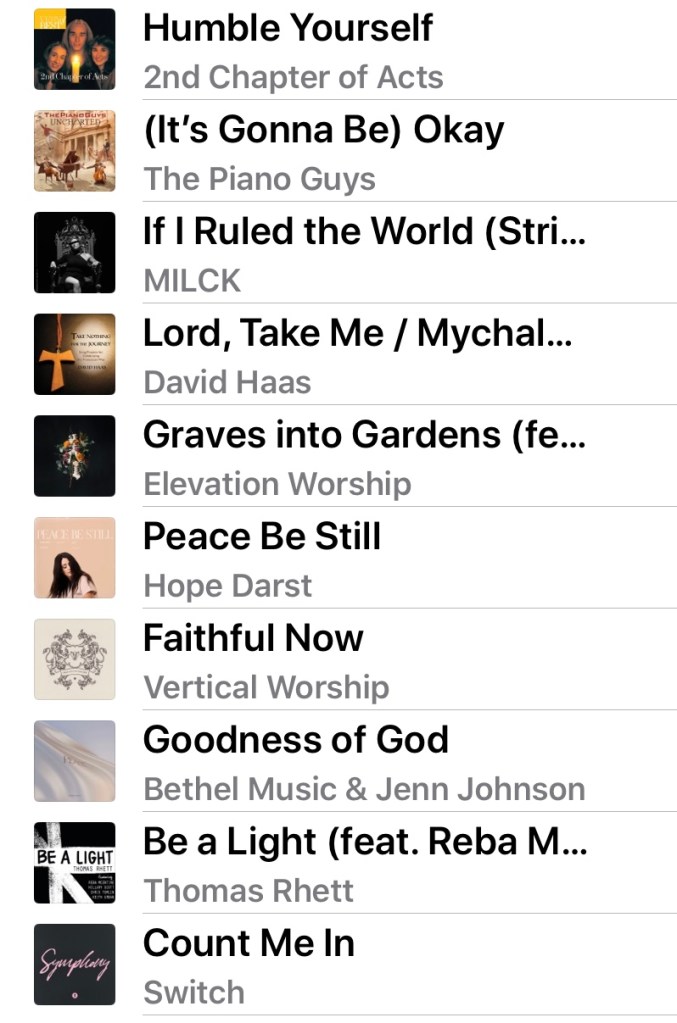
Discernment Playlist – Songs 1 – 10

Fifty-Nine Songs, 4 Hours and 13 Minutes

A long, challening period of discernment began for me in early February. By the time a decision became time sensitive, COVID-19 had begun to craft a new reality for all of us. Decisions that Steve and I were in the midst of about church community had to pause. A multitude of concerns were happening that impacted my current leadership roles in the church. The United Methodist General and Jurisdictional Conferences were postponed, pushing decisions about the future of the denomination into the second half of 2021. The discernment continued through March, then into April and May. Still today, I wonder if I have made the right decision. More on that at a later time.

COVID-19 changed the vision I had for a Clearness Committee. In its place was a series of Clearness Conversations by phone, Zoom and FaceTime. Knowing how powerful music is in my life, one of those surrounding me in this process asked what songs I would have in my playlist for this time, this questioning, this decision-making. And a “Discernment” playlist was born, just like the “Called General Conference” playlist that some of you reading this blog helped create. There is also now a “Forward to 2021” playlist.

Today seems like the right time to start sharing a little about the songs on the playlists: 37 songs (to date) on the “Discernment” list and 22 on the “Forward to 2021” list. Fifty-nine songs, 4 hours and 13 minutes.

So the first song, chosen with deep memories, struggles and learnings: “Humble Yourself” by 2nd Chapter of Acts.

Heading to college in 1979, I didn’t have much exposure to contemporary Christian music. Honestly I don’t remember there being much of it. Patty Jo Riddick would be the one to introduce me to Tim Sheppard, Amy Grant, and 2nd Chapter of Acts. I carried the 2nd Chapter of Acts *With Footnotes album from place to place for years, having memorized every song and loving the tight harmonies of the siblings in the group. Patty Jo also introduced me to homemade souse meat from her family’s hog farm but that’s another story. She was the only other young woman on 3rd Stringfield at Meredith that fall who wanted to watch the World Series. Patty Jo should actually be credited with the beginning of the Psychiatric Help 5 Cents role in my life as we paraded around campus for Halloween that year dressed as Lucy and Snoopy. By the spring, we were singing “Boogie Woogie Bugle Boy” for Stunt and laughing so hard that we couldn’t continue the song.

Patty Jo married during our junior year. Soon after we graduated, she and her husband, Rick Pulley, began traveling up and down the East Coast hoping to start a contemporary Christian singing career. I had the opportunity to see them perform a few times. They eventually moved to a church in Ringgold, VA, that I drove within 5 miles of every time I traveled home to Fieldale from Richmond. For the years they were there, we were never able to connect because they were traveling or involved with church activities or I felt too pressured to get to my Mom or back to Richmond. You know…twenty and thirty-something year olds are busy! We stayed connected – before cell phones – with cards and notes.

I’ll never forget the phone call in May, 1999, telling me that Patty Jo was missing. She left home to go shopping and did not return. Her remains were found over the state line in Caswell County, NC, in December, 2002. In February of the next year, Rick was charged with first degree murder in her death.

For some reason, the physical distancing of COVID-19, the feelings of loss and mourning that have come in this odd season and this period of discernment brought back wonderful memories of Patty Jo. At the same time, I realize how wrong my priorities were in not nurturing our friendship. I allowed my perceived priorities to become more imporant than a person who had enriched my life in so many ways.

So in memory of Patty Jo, “Humble Yourself” became the first song on the “Discernment” playlist. It is a reminder of how I need to approach God and the continuing formation of my faith. “Humble yourself before the Lord…

If you’re weak, He is strong
In His strength you can carry on
When you lay down your life before the Lord.”

Songwriters: Anne Herring / Jim Tenneboe
Humble Yourself lyrics © Latter Rain Music

It Takes a Google Doodle

There’s been a weariness, a heaviness in my heart and soul this week that I haven’t been able to accurately name until this morning. Events of yesterday helped to call it to life. Steve and I spoke to a friend yesterday evening whose father died last weekend. His father had been in declining health. He was a year younger than my mother who died last October right before her 94th birthday The realization that his family had not been able to surround him as death neared and now hearing his son talk about sitting Shiva without being able to carry out traditional rituals with family and friends brought back a high level of greif and sadness for me. It’s also Father’s Day weekend which, even though my father died forty-five years ago, always brings tears. Then there are the realities of our struggle with inequality and justice. For weeks I’ve been urgentlly feeling the need to come up with concrete steps for what I am to do in this time and space.

I try very hard to never say something is God’s plan. My “deep” theological understanding is that God works in mysterious ways and in God’s time! For me some of that mystery most often seems to be revealed in the middle of the night. So as I turned on the compter at 2:30 AM, what do I encounter first: today’s Google Doodle recognizing the 155th anniversary of Juneteenth. The voice of LeVar Burton. I vividly remember sitting in my father’s recliner and watching every moment of Roots in 1977, the life and story of young Kunta Kinte making a major impact on the 16 year old watching it at the time. The words of “Lift Every Voice and Sing.” I have sung the song all my life, led it before many a congregation, but never knew the words came from a poem by James Weldon Johnson created for Abraham Lincoln’s birthday. And the art of Loveis Wise. I just want her name! None of this is what I expected to find and be moved by in these early morning hours.

I can use a multitude of descriptions of myself that would not give much indication of the privilege I live under, but my privilege is always present. I feel it more and more every day. I am the:

  • Granddaugher of tenant farmers in the Appalachia region of Virginia who survived the Great Depression with 9 children
  • Daughter of factory workers who struggled to make ends meet and took out short-term loans for every family vacation
  • Chubby child who has always struggled with her weight
  • Teenager raised by a single mother
  • College and university student who made tuition payments with Social Security and Veterans Affairs death benefits and loans that took 10 years to pay off
  • Young adult who cashed in gifted Savings Bonds to make mortgage payments on her first house
  • Thirty-something, newly married who because of life circumstances made a decision with my spouse to not have children of our own
  • Adult child of an aging parent without savings who entered HUD-sponsored housing and later a Medicaid long-term care community
  • And now, the elder orphan with an older spouse beginning to wonder what will happen in my own aging.

Following the Called UMC General Conference in St. Louis last year, I described myself in a blog post as a “cisgendered woman married to a previously married man.” That description along with others I used were an attempt to make the point that depending upon how we interpret verses of the Bible, none of us – least of all me – may be truly “worthy” to be part of the Body of Christ. A person I have worked with in a variety of positions within the church replied to me by email. A part of the individual’s questioning was why I felt that I had to use the word “cisgendered” since we are all “supposed to be that way.” I responded to that statement with these words:

Let me start with why I used the term “cisgendered.” I did not use it in any way as a term of ridicule or contempt. Remember, I’m a social worker by education. Labeling myself as “cisgenered” reminds me of the privilege I have and how that affects my understanding, or lack thereof, of people who are treated differently in society because of categories and labels. I would never use the term to describe someone else. I can never fully understand what it is like to be LGBTQ+ just as I can never fully understand what it means to be of a different race or ethnicity, non-Christian faith tradition, generation or anything else other than a white, Christian, middle income, straight, Boomer generation woman. I can listen. I can seek to understand, but I need to be reminded, even if it’s by a word like “cisgendered” that I am privileged in today’s society.

Oh, so many labels – none of which clearly denotes privilege by its description but all of which add to the fact that I have had opportunities that so many others have not experienced.  From an abundance of food and safe, warm housing to a graduate level education and consistent employment with good benefits, I am privileged. The question today is what do I do with it to make the world a better place for all people.

There’s a line from the movie, My Dog Skip, released in 2000, that I wrote down when I first saw the movie and have kept with me since.  It was spoken by the character, Jack Morris, the father of the main character, a young boy named Willie.  The movie addresses racism, war, bullying, loneliness and much more – and how a loving, social little dog can help to overcome it all.  At one point in the movie, Jack Morris states, “Give a man a label, and you never really need to get to know him.”

The descriptions I apply to myself help me see how much I have in common with others. Somewhere our stories must have a connection, and upon that similarity a relationship can be built.  Place a label on me and the opportunity may disappear.

Leave it to a Google Doodle to point my heart in a better direction this day.

(Not) On My Way to Minneapolis

If COVID-19 had not exploded around the world, I would have been making my way to the Richmond airport right now to board a plane to Minneapolis. There I would have joined 861 fellow United Methodists from around the world to determine our future as a denomination. Instead of flying to Minnesota, I’ll be participating in Zoom meetings and telephone calls. I will not receive my credentials as a delegate or go to an orientation session, but I will address the demands of a global pandemic on seniors.

I had hoped that decisions would be made which would end our 48 year debate about who is and who is not fully included in the Body of Christ. Just writing that sentence leaves me numb. Who am I to even have a small part in such a life-altering decision?

I had been praying that by the time July arrived and the Southeastern UMC Jurisdictional Conference met, we would have a clearer picture of new bishops to be elected and changes in assigned episcopal areas for others. I prayed that after a lifetime of division, we might actually be able to make courageous, strategic decisions as to how we move forward to actually transform individual lives and the world.

But now, just like every local United Methodist congregation trying to envision what church will be after this time of COVID-19, there are still just questions without immediate answers. Those answers will have to wait for at least another 15 months. What will the world be like then? What will “church” be like then? What are we learning during this strange and challenging time that might make the decisions required of the next General Conference have an unexpected result?

Today I’m going to wear the General Conference jewelry I had purchased in anticipation of this day. One bracelet carries my guiding phrase for 2020: “Delicious Ambiguity.” The other has the theme for the General Conference: “be still and know” from Psalm 46:10. Can I carry both of those statements through until the fall of 2021? Who will I be in 15 more months – a stronger advocate, a weaker soul, a better disciple?

I wonder if after these weeks of being apart from one another we might as followers of Jesus realize just as Jesus tried to teach us that it is a person’s heart that really matters – not the color of their skin, who they love, their political leanings or where they were born or choose to live. I wonder if being “still” for these few months might lead us to deeper personal discernment about how we care for one another, even to the point of giving up our freedom in order to protect our neighbors or potentially giving up our lives to make sure the most vulnerable survive. Will not being able to physically share our table space with others cause us to want the circle open more widely once we can gather together again?

The General Conference reading is hidden away for now. The airline and hotel reservations will have to be made again. New guiding words and themes might emerge. And maybe, just maybe, the Holy Spirit is moving in the most mysterious of ways.

In The Message, Eugene Peterson translated the ending words of Psalm 46:10 this way:

“Step out of the traffic! Take a long, loving look at me, your High God, above politics, above everything.”

Hummm? Mysterious ways???

The traffic has stopped on what was to be a day of travel. Weeks of isolation are offering time for discernment and courageous decisions – a long, loving look at God if we so choose. And God above politics…. Hummm? Mysterious!!!